 SELECTED FOR DEPARTMENT OF WAR SUSTAINMENT MODERNIZATION PROGRAM

RESOURCES
Research, perspectives, and real-world results from the team building the future of manufacturing.
19 resources
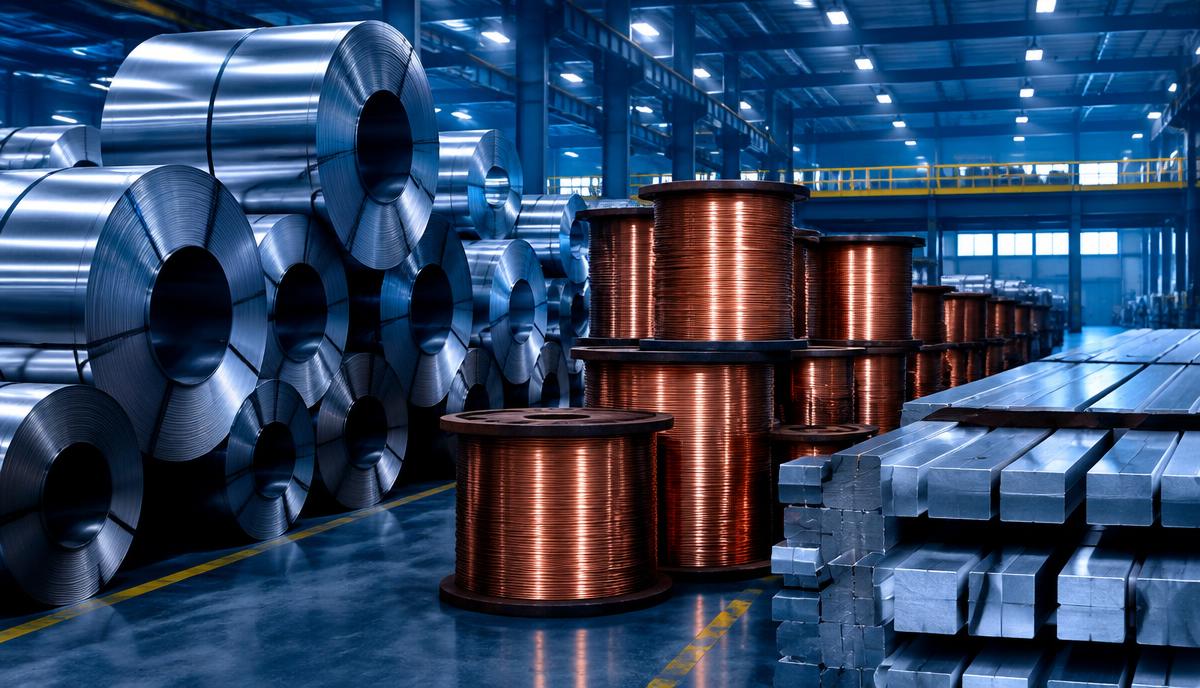
Rising steel, aluminum and copper prices? Learn how manufacturers can reduce part costs through design changes, DFM and supplier-validated alternatives.
Read blog ↗Estimated cost reduction for the bracket group at planned volume
A robotics startup screened a few hundred parts with Arcessio and identified roughly 20% cost savings through bracket consolidation and 19% projected recurring savings through design commonality, before drawings were finalized.
Read the case study ↗Review time, down from 4–6 weeks of manual triage
~1,100 legacy government drawings triaged for manufacturability in 12 hours instead of 4–6 weeks of engineering time.
Read the case study ↗Cost reduction per part
A wire lifter re-routed from an 8-week tooling cycle to metal additive: delivered in 9 days at half the cost per part.
Read the case study ↗Lead time reduction: part delivered in 3 days instead of 30
An overweight robotic jig was made lighter and cheaper using SLS Nylon 12, then delivered in 3 days instead of 30 at $20 per part.
Read the case study ↗Qualified for metal additive production
25 candidate parts screened across tooling and fixtures; three qualified for metal AM and reached validated production in 8 months.
Read the case study ↗Cost reduction per quarter versus tooling
A quarterly 200-unit PEEK order costed against tooling and machining, saving $58.7K per quarter.
Read the case study ↗Cost reduction per assembly
Parts consolidation across high-mix sub-assemblies cut cost per assembly by 75% and simplified the BOM.
Read the case study ↗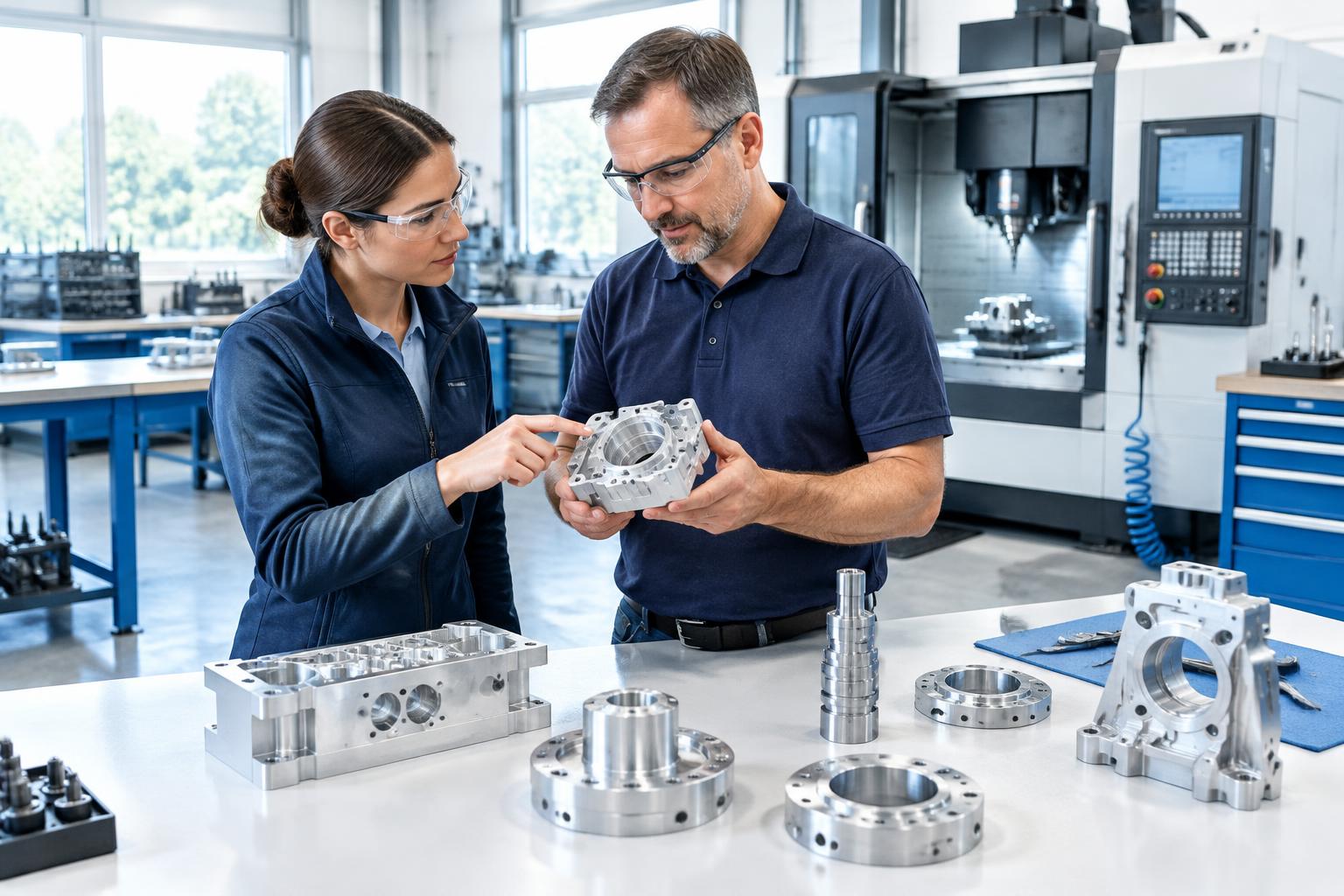
No transaction fees, no referral fees, no hidden fees, and no markup. The price a supplier quotes is the price the buyer pays.
Read blog ↗
What 30 years around operational aircraft taught me about supply chains, readiness, and the future of manufacturing.
Read blog ↗
How a missing spare part can cascade into mission failure, and how on-demand manufacturing changes the equation.
Read blog ↗
A practical look at how companies can begin transitioning legacy aftermarket operations using additive manufacturing and AI.
Read blog ↗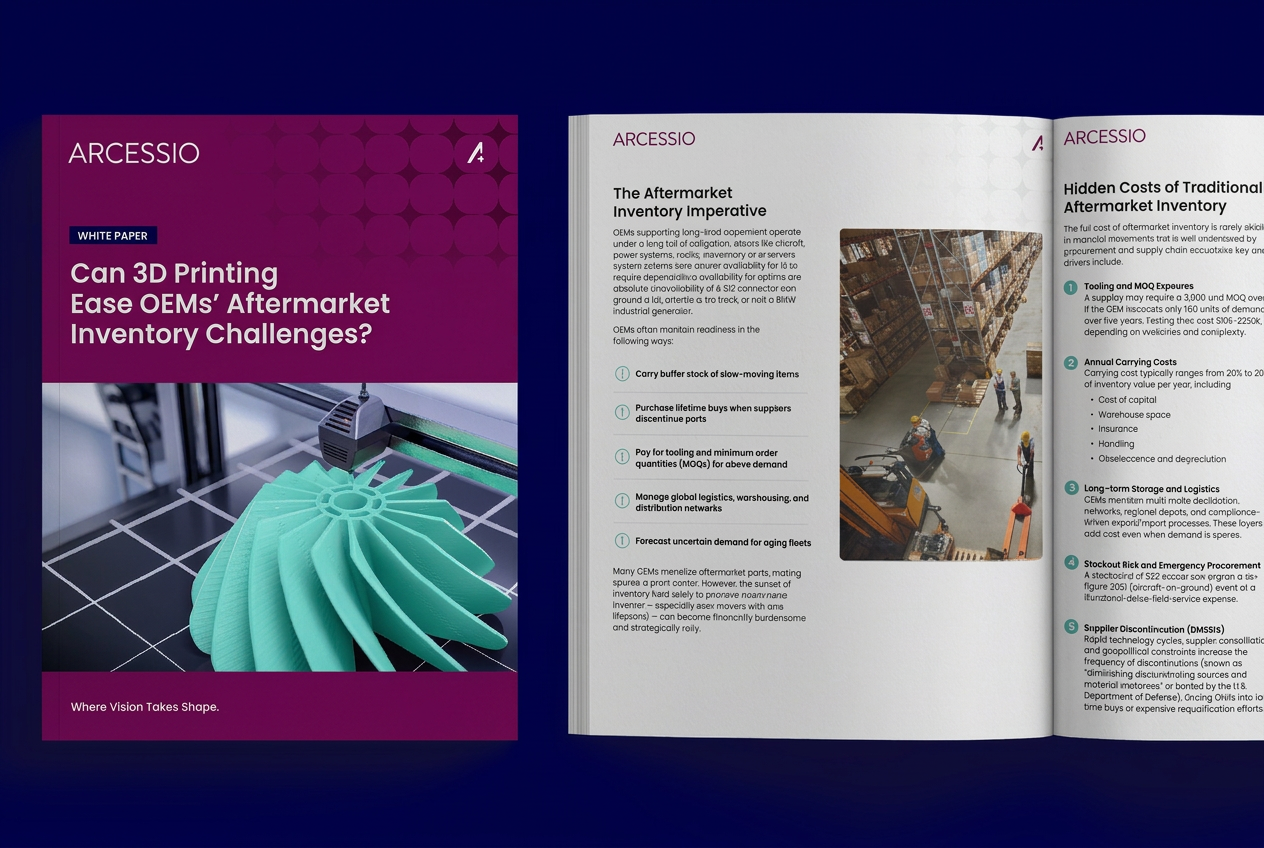
Supply chain leaders understand the burden of long-tail inventory. This paper explores how 3D printing can alleviate it.
Read paper ↗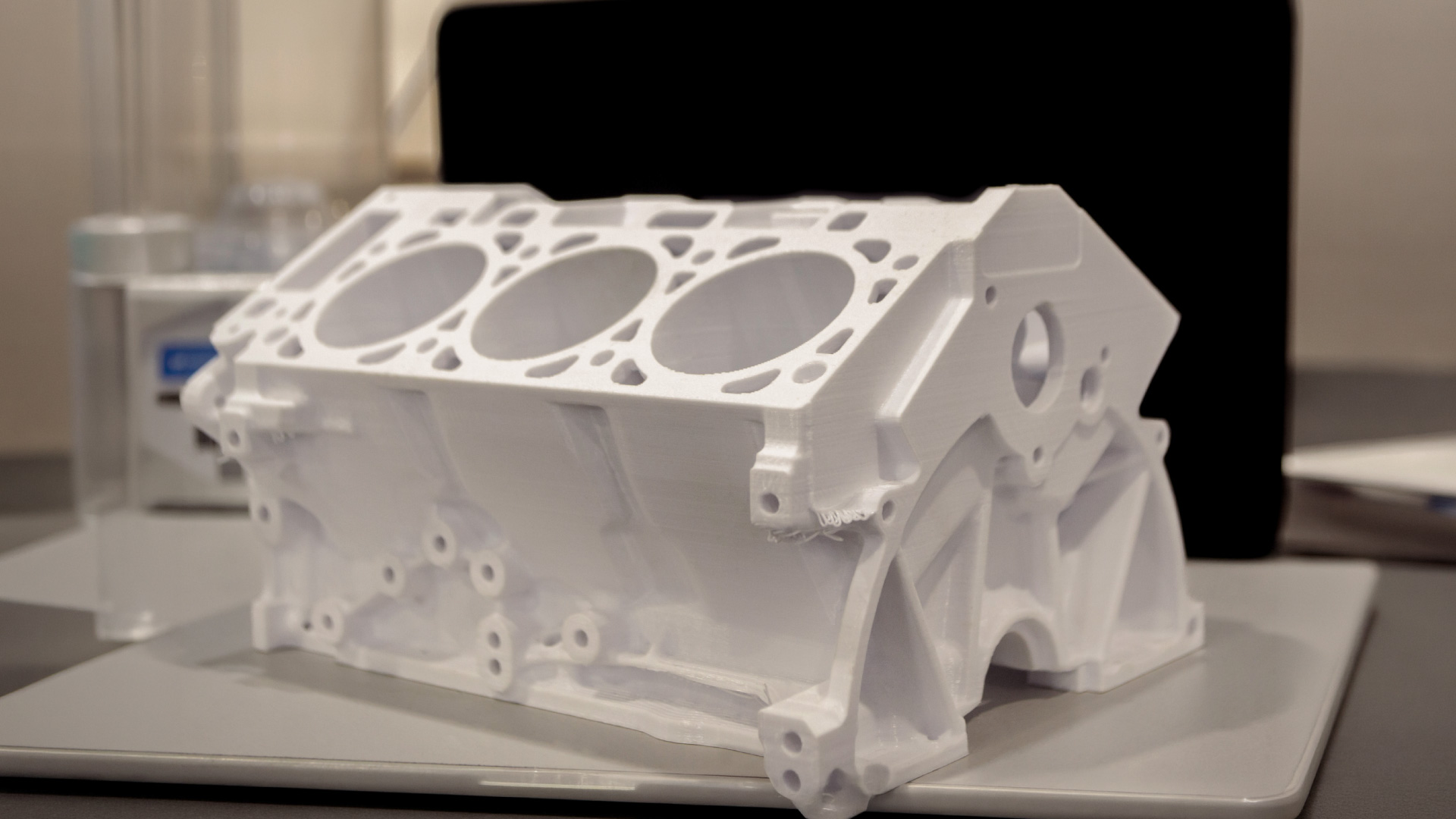
An exploration of the breadth of 3D printing applications transforming industries from healthcare to aerospace.
Read blog ↗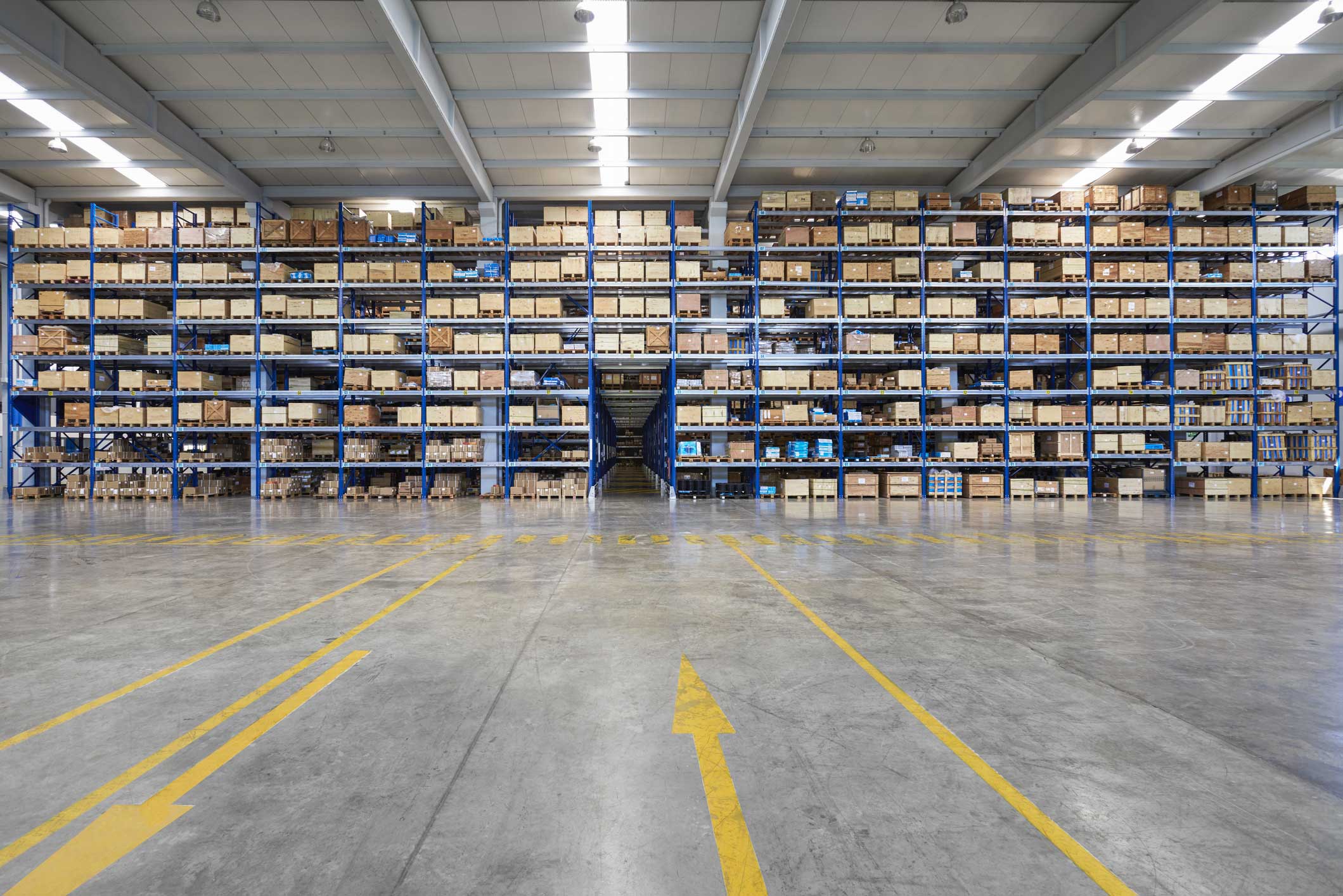
OEMs in industries like aerospace and automotive carry massive legacy inventories that erode profitability.
Read blog ↗
How Arcessio is working with the DoD to overcome barriers to additive manufacturing adoption for defense readiness.
Read blog ↗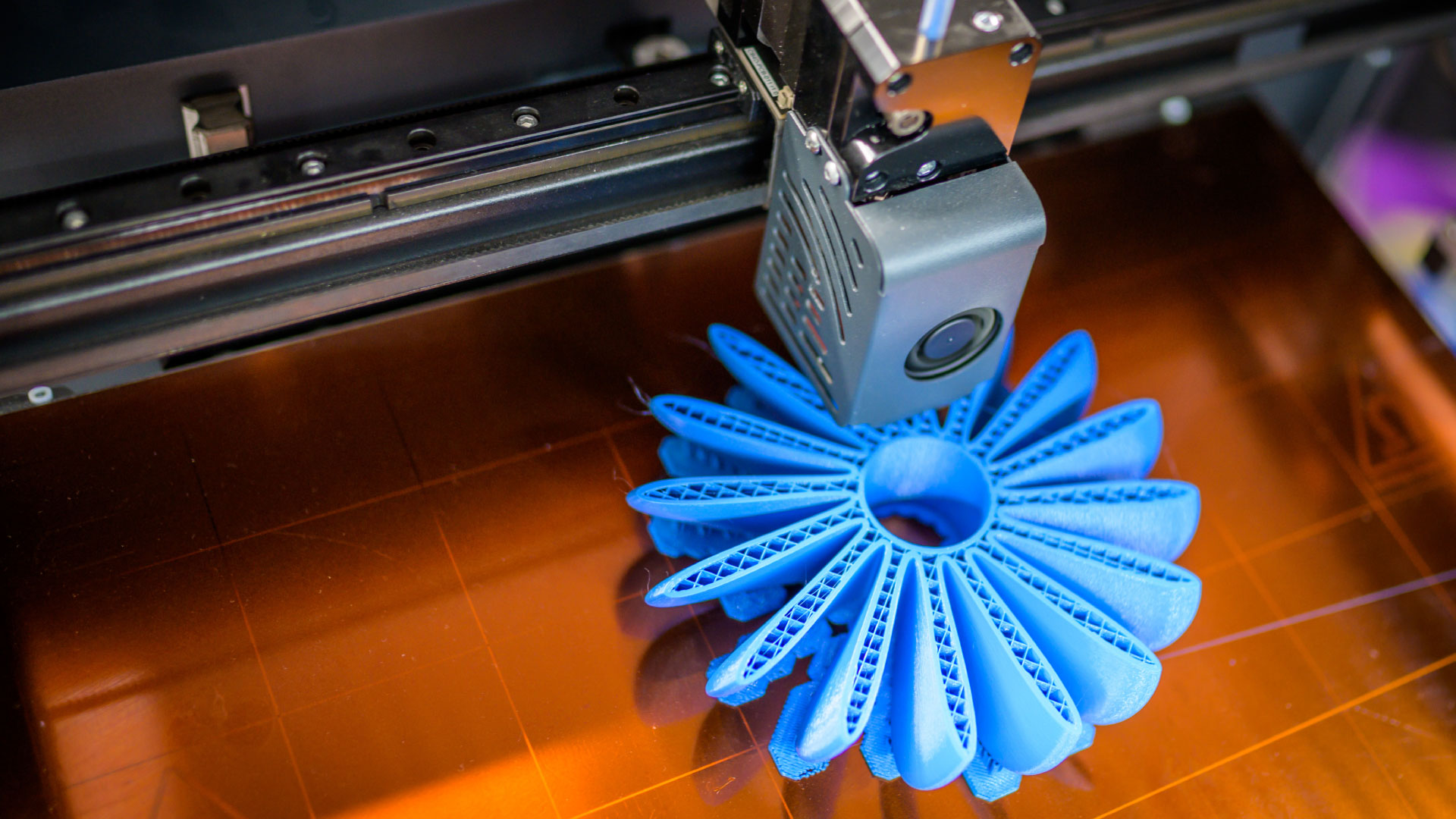
How outdated inventory management practices impact earnings, cash flow, and company valuations across industries.
Read blog ↗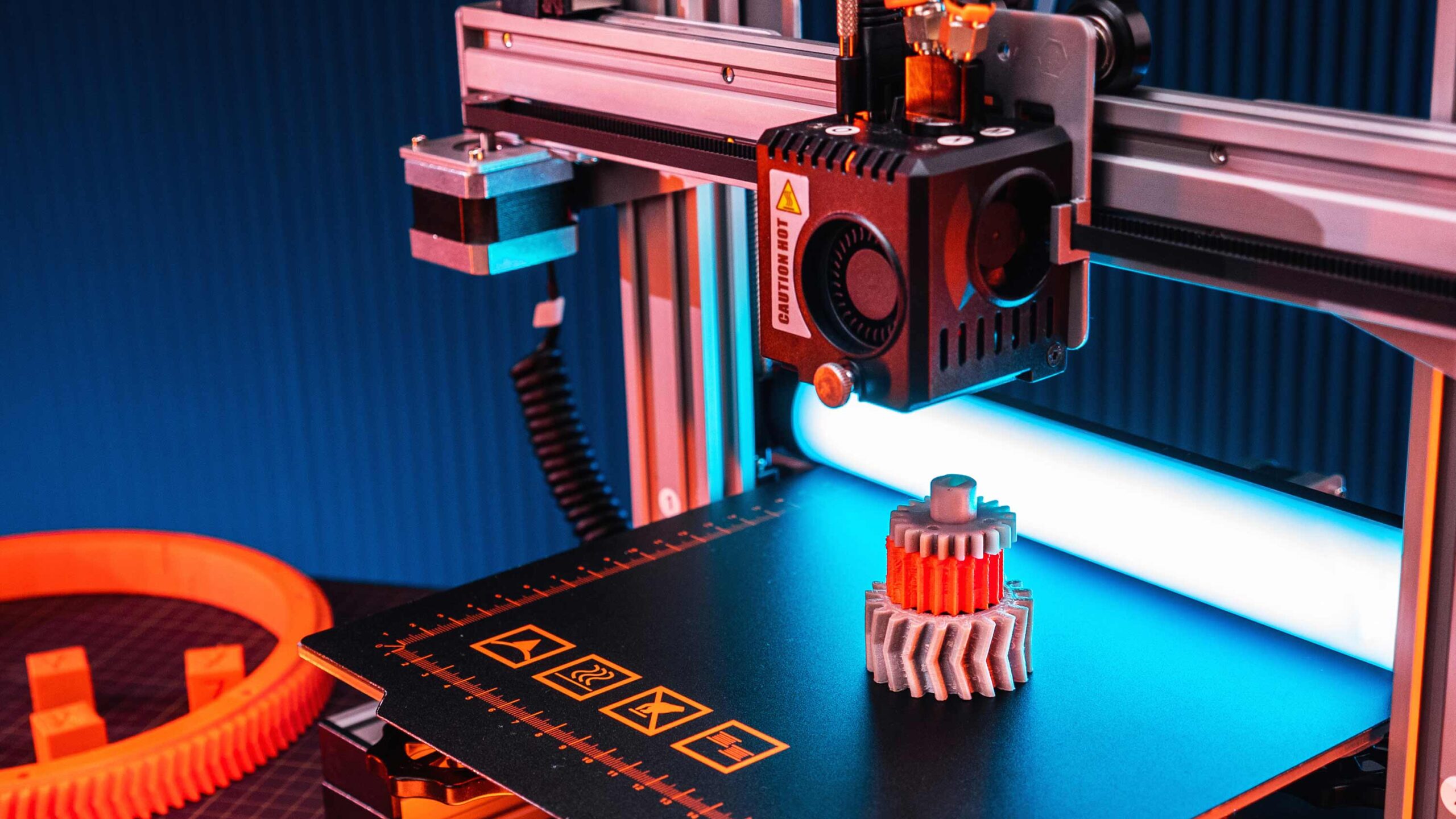
The intersection of AI, additive manufacturing, cost reduction, ESG goals, and national security imperatives.
Read paper ↗
Why traditional approaches to stocking legacy parts are financially unsustainable and what manufacturers can do differently.
Read blog ↗